Migrating From SQL to NoSQL: A Step-by-Step Guide for Technical Teams
While relational databases have been accommodating engineering divisions for ages, they eventually present opportunities when highly excessive write loads are processed and fast-pacing data models start showing off (as is happening when applications are dispersed over distributed services)-although they work under such conditions. NoSQL systems, on the other hand, follow a different modus operandi while installing uncluttered consistency and explicit critical schemas for the sake of speed and flexibility, although it is not always true that such kind of a trade-off is the correct way forward. The conversion, therefore, should be based on the most reasoned assessment and strong conviction, with precedence ordering upon other inherent factors. The following guide will facilitate evaluation of your existing system, the redesigning of your data model, the move itself, and the confirmation of your new result.
Assess Your Workload, Data Model, and Migration Goals
Before touching a single schema, you need an honest evaluation of why you’re considering this move at all.
Relational databases excel at enforcing consistency through ACID transactions, complex joins across normalized tables, and hard constraints that keep data clean. Those strengths matter. If your application depends heavily on multi-table joins or strict referential integrity, migrating may create more problems than it solves.
Run through these checkpoints before committing:
- Identify candidate applications. Not every service in your stack is a good candidate. Start with ones showing clear scalability or flexibility pain.
- Classify your data. Structured data with stable relationships may stay relational. Semi-structured or unstructured data, think JSON payloads or nested documents, often maps better to document or key-value stores.
- Map access patterns. NoSQL schema design is query-driven. Know which reads and writes happen most frequently before choosing a data model.
- Define success metrics upfront. Target specific numbers: response time under 50ms at the 95th percentile, 3x write throughput, or 40% infrastructure cost reduction. Vague goals produce vague outcomes.
Choose the Right NoSQL Model and Redesign the Schema
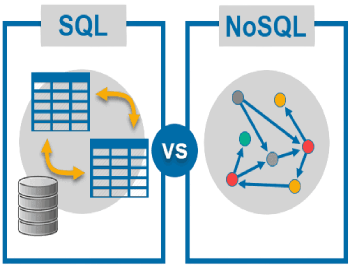
You must get your NoSQL type right even before writing your initial migration line. Document stores like MongoDB go hand in hand with rich and hierarchical records. Key-value stores like DynamoDB make way for single identifier high-speed lookups, and wide-column databases such as Cassandra are better suited for time-series or write-heavy workloads. Lastly, graph databases like Neo4j are best suited for scenarios where all queries are relationship-centric. You should align your model with the way an application would read data rather than with the way your SQL schema is structured.
Redesigning the schema is where teams most often underestimate the work involved. SQL is built around normalized relationships; NoSQL is built around query patterns. That shift changes everything. Take a classic e-commerce setup with separate customer, order, and product tables joined at query time. In MongoDB, you’d likely embed order line items directly inside the order document, since they’re almost always read together. Customer records might reference orders by ID rather than embed them, because a customer with 500 orders would produce an unwieldy document.
Denormalization implies that certain data elements are deliberately being stored in more than one place, for example, a product name inside an order document and also in a product catalog. You don’t mind because you are optimizing read-time performance at the price of purity in storage.
The partitioning key strategy plays a significant role in the distributed storage field. A bad partition key design quickly creates hot spots where one node is dealing with most of the traffic.
Roads from heading to a further salt sea. Joins, foreign keys, and constraints are not applicable in this case. Referential integrity is a concern for your application level, and any validation logic your database might do goes away.
Execute the Migration in Phases and Validate Every Step
Rushing through a pileup doesn’t lead to corrupted records and emergency calls on a 2 a.m. Incident. Move through the actions in order.
Start with a dedicated migration environment. It’s best modeled after your production environment – fully as is as you can get. Back up your full database before you touch anything. Name an owner for each stage so that accountability is not vague.
Next, build your data pipes. ETL (extract, transform, load) is the standard way to approach it: pull data from an SQL source, shape it to fit the NoSQL schema, and load it into your target. If they have a never-ending stream of writes, live systems can send updates in near real time from the get-go using tools like Debezium for change-data-capture.
Migrate a representative subset first, maybe 5–10% of records covering your most complex data patterns. Validate row counts, referential integrity, and query response times before moving the rest.
Once data is in place, update your application code, APIs, and queries to target the new database. Running dual writes during this window, where your app writes to both systems simultaneously, reduces the risk of data loss if something breaks late.
A Careful Migration Delivers Flexibility Without Losing Control
Getting this right comes down to three things done well: choosing a NoSQL model that genuinely matches your workload, rethinking your schema around access patterns rather than just converting tables, and moving through the migration in controlled phases where each step is validated before the next begins. Teams that rush a full cutover tend to discover operational gaps only after production traffic exposes them. Plan carefully, test against realistic data volumes, and track performance and error rates at every stage. Do that, and NoSQL can meaningfully improve scalability and agility without burying your team in new complexity.